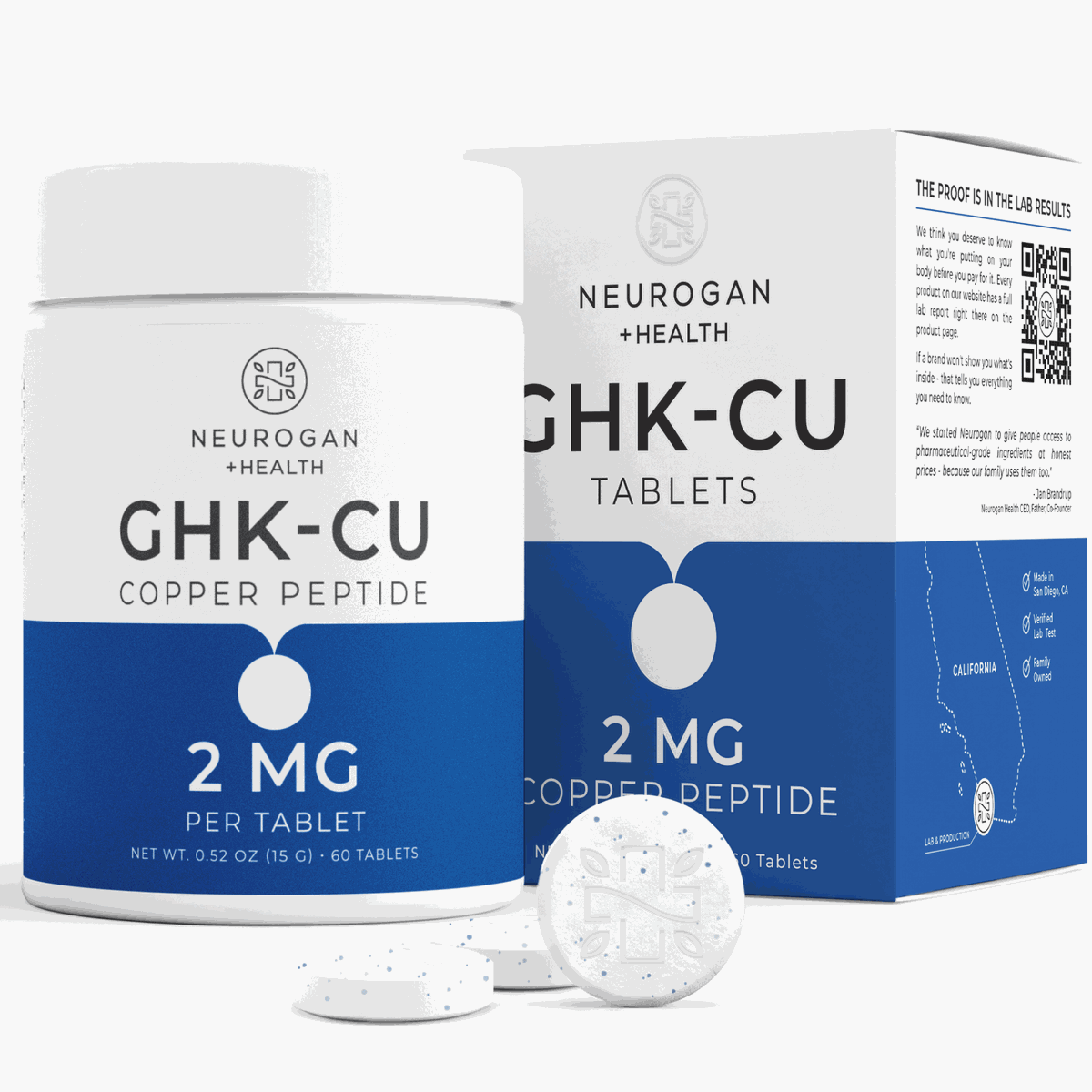
Distilled and sterilised water with 0.9% Benzyl Alcohol preservative Laboratory-grade formulation for controlled-use environments Gamma-irradiated, sealed vials with tamper-evident crimp seal Designed for non-medical applications Not for injection, medical treatment, or therapeutic use Shelf life of roughly 28 days

GHK-Cu published research history: - First isolated and characterized: 1973 - Continuous peer-reviewed publication: 50+ years - Published research covering: wound healing, skin biology, COPD, oxidative stress, bone, skeletal muscle, gastrointestinal, neurological, gene expression, aging - Mechanistic characterization: Multiple pathways identified, SIRT1 direct binding confirmed in 2025 - Cell and animal model validation: Extensive across multiple tissue types and species Matrixyl 3000 (palmitoyl tripeptide-1 + palmitoyl tetrapeptide-7) research: - Commercial introduction: Early 2000s - Research base: Primarily cosmetic science and dermatology literature - Mechanistic characterization: Primarily focused on TGF-beta receptor and IL-6 pathways - Depth: Narrower tissue focus, smaller body of published mechanistic research For researchers who need a compound with extensive published mechanistic context, detailed gene expression data, or research across multiple tissue types, GHK-Cu's research depth is substantially greater

Its a valid concern
CMS said federal funding for these programs has grown from $886 million in 2019 to nearly $2.7 billion this year
Post-injection, the needle remained in the peritoneal cavity for a period to ensure effective sealing of the injection site, preventing medication efflux and facilitating absorption during peristalsis